
Preparing for Pregnancy
Starts Long Before Conception:
Why Preconception Health Matters
The Most Important Health Decision
Many Women Never Realize They're Making
Most women are taught to prepare for pregnancy only after they see a positive pregnancy test.
Take a prenatal vitamin. Schedule an appointment. Avoid certain foods.
While these recommendations are important, they overlook a critical reality:
Pregnancy preparation begins long before conception occurs.
Research increasingly shows that preconception health may be one of the most important factors influencing fertility,
pregnancy outcomes, and the lifelong health of a child.
The months before conception provide a unique opportunity to optimize your health, support reproductive function,
and create the strongest possible foundation for future generations.
This period is known as the preconception window—and it may be one of the most overlooked opportunities in modern healthcare.
What Is Preconception Health?
Preconception health refers to the physical, emotional, environmental, and lifestyle factors that influence health before pregnancy occurs.
Rather than focusing solely on conception itself, preconception health considers the quality of the biological environment
that will support:
Fertility

Pregnancy
Postpartum recovery

Child development

Long-term
family health
Although many women begin preparing for pregnancy a few months before trying to conceive, evidence suggests that health patterns established long before conception can influence reproductive outcomes.
Simply put:
The health of a future pregnancy begins with the health of the woman before pregnancy.
Your Body Becomes Your Baby's First Home
Long before a baby has a nursery, a name, or a heartbeat, it has an environment.
That environment is your body.
The quality of your nutrition, metabolic health, sleep, stress resilience, environmental exposures, and overall wellbeing help shape the conditions in which conception and early development occur.
Scientists now recognize that these factors may influence not only fertility but also the lifelong health of future children.
This concept is often explained through epigenetics—the study of how environmental and lifestyle factors influence gene expression.
Why Fertility Is a Whole-Body Process
Many women think of fertility as a reproductive issue.
In reality, fertility reflects the health of multiple interconnected systems.
Healthy reproductive function depends upon:
- Nervous system regulation
- Hormonal balance
- Metabolic health
- Nutritional status
- Immune function
- Cellular energy production
- Detoxification pathways
- Sleep and circadian rhythms
When these systems are affected by chronic stress, inflammation, nutrient depletion, blood sugar imbalances, environmental toxins, or poor sleep, reproductive health may be affected as well.
This is why preparing for pregnancy requires more than tracking ovulation or taking supplements.
It requires creating the conditions for your body to thrive.
The Five Foundations of Preconception Health
1. Nervous System Regulation
The body was not designed to remain in a constant state of stress. Chronic activation of the stress response can affect hormone signaling, sleep quality, inflammation, energy production, and reproductive function.
Creating safety within the nervous system is one of the most overlooked foundations of fertility and reproductive wellness.
2. Metabolic and Hormonal Health
Blood sugar balance, insulin sensitivity, thyroid function, nutrient status, and inflammation all influence reproductive health.
Optimizing these systems before conception supports not only fertility but also maternal health throughout pregnancy.
3. Environmental Health
Everyday exposure to endocrine-disrupting chemicals, pollutants, and environmental toxins may place additional stress on the body.
Reducing toxic burden before conception can help support the body’s natural detoxification processes and create a healthier internal environment.
4. Cellular Health
Healthy eggs, healthy tissues, and healthy pregnancies depend upon healthy cells.
Cellular energy production, mitochondrial function, and protection against oxidative stress play important roles in reproductive health.
5. Conscious Preparation for Motherhood
Motherhood is more than a biological event. It is a profound life transition.
Preparing emotionally, mentally, relationally, and spiritually may be just as important as preparing physically.
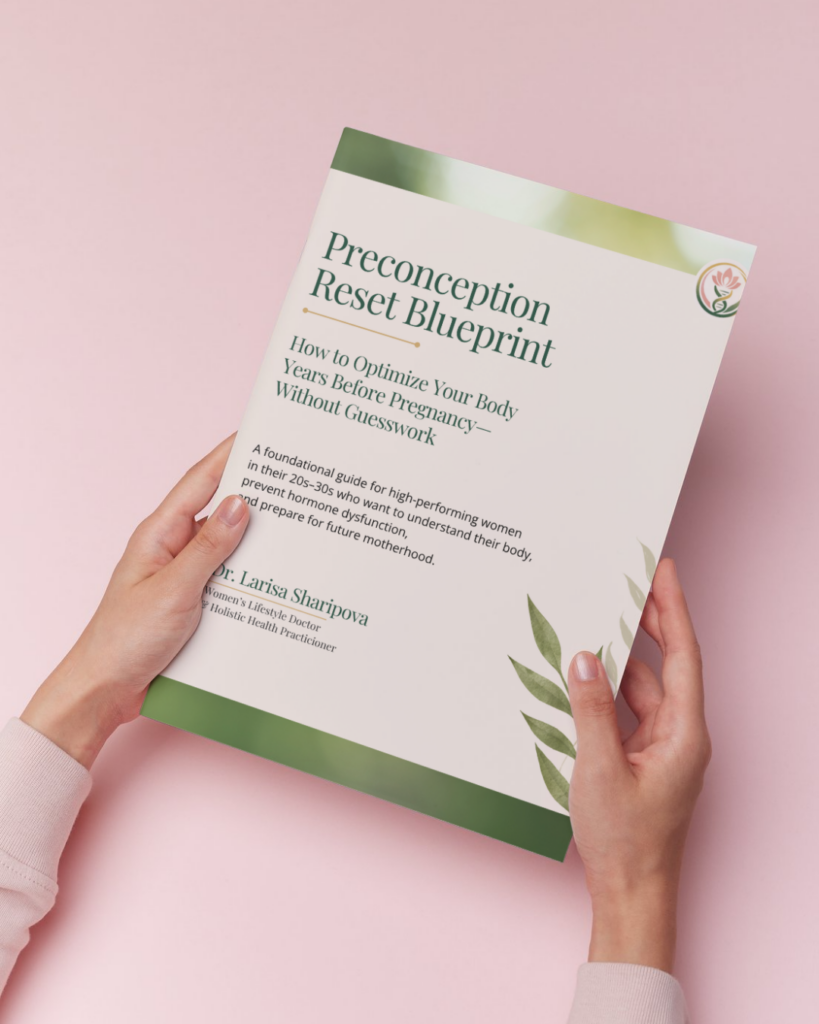
Download the Preconception Reset Blueprint
If you’re planning for pregnancy within the next year—or simply want to build a healthier foundation for your future family—download my free guide:
The Preconception Reset Blueprint
Inside you’ll discover:
✓ The fertility timeline most women overlook
✓ Key areas of preconception health to optimize
✓ Environmental factors that may influence fertility
✓ Lifestyle practices that support reproductive wellness
✓ Simple steps you can begin implementing today
The Science of Future Generations
One of the most exciting developments in health science is the growing recognition that parental health before conception matters.
Research in developmental biology, epigenetics, and preconception care suggests that nutrition, stress, environmental exposures, metabolic health, and overall wellbeing before pregnancy may influence maternal outcomes and child health.
This emerging science shifts the conversation from:
“How do I get pregnant?”
to:
“How do I create the healthiest possible environment for my future child?”
That question lies at the heart of intentional preconception health.
Introducing Preconception Intelligence™
For years, women have been told to wait until pregnancy to focus on their health.
I believe the most powerful opportunity comes before conception.
Preconception Intelligence™ is my integrative framework for helping women prepare their bodies for pregnancy through nervous system regulation, metabolic health, personalized biological optimization, and conscious preparation for motherhood.
It is built upon a simple idea:
The future begins before pregnancy.
Final Thoughts
Preparing for pregnancy is not about perfection.
It is about intention.
Every positive change you make before conception is an investment in your own wellbeing, your future pregnancy, and the health of future generations.
The preconception window offers a powerful opportunity to create lasting change.
And the best time to begin is before you think you need to.
Continue Your Learning
Next Article
Functional Genomics and Fertility: What Your DNA Can Reveal Before Pregnancy
Learn how genetic variations may influence nutrient needs, detoxification pathways, methylation, hormone balance, and reproductive health.
Ready for a Personalized Approach?
While educational resources provide a valuable foundation, every woman’s biology is unique.
If you’re interested in a personalized, nervous-system-first approach to preconception health, learn more about the Preconception Intelligence™ framework and available programs.
Scientific References
- World Health Organization. Preconception Care: Maximizing the Gains for Maternal and Child Health (2013).
- Dean SV, Lassi ZS, Imam AM, Bhutta ZA. Preconception Care: Closing the Gap in the Continuum of Care to Accelerate Improvements in Maternal, Newborn and Child Health. Reproductive Health. 2014.
- Dean SV et al. Preconception Care: Nutritional Risks and Interventions. Reproductive Health. 2014.
- Lassi ZS et al. Preconception Care: Delivery Strategies and Packages for Care. Reproductive Health. 2014.
- Carter T et al. Paternal Preconception Modifiable Risk Factors for Adverse Pregnancy and Offspring Outcomes.BMC Public Health. 2023.